Overall Review
Reviews the article end to end: whether its central claims are accurate and supported, its sources are strong and transparent, its context and framing are fair, and its uncertainty is stated honestly.
Audits articles
6 checks
Version 1
1 run per audit
Doesn't read sources
anthropic/claude-opus-5-5
What it checks
-
Central claims are accurate
claims-accurateRating each major claim True, Mostly True, Mixed, Mostly False, False, or Unverifiable, are the article's central claims accurate?
9 findings · 1 applied -
Claims are supported and labeled
claims-supportedIs every major claim backed by cited evidence, and does the article keep verifiable facts, reasonable inferences, and opinion or speculation clearly apart?
18 findings · 2 applied -
Sourcing is strong and transparent
sourcing-qualityDoes the article rely on primary or high-quality secondary sources, rather than weak, circular, anonymous, or partisan ones, and is it clear which source supports which claim?
18 findings · 3 applied -
Context is complete
context-and-omissionsDoes the article include the context and contrary evidence a reader needs, with no omission that changes the overall impression?
22 findings · 5 applied -
Framing is fair and neutral
framing-fairIs the framing and emphasis fair, applying the same standards regardless of side, and does the article represent the original claim and the people who make it accurately?
2 findings · 1 applied -
Uncertainty is stated
uncertainty-statedWhere evidence is incomplete, contested, or still developing, does the article say so rather than invent certainty, and where evidence conflicts, does it present the strongest evidence on each side and explain which is more credible?
5 findings · 1 applied
Each check comes back as Pass, Concern (minor or material), Fail, Not applicable, or Not checked.
How it grades
The first rule that matches the check results gives the grade.
- Check 'claims-accurate' is Fail The central claims are false, fabricated, or severely misleading, or the article fails on more than one front. It reads more as misinformation than as fact-checking.
- 2 or more checks are Fail The central claims are false, fabricated, or severely misleading, or the article fails on more than one front. It reads more as misinformation than as fact-checking.
- Any check is Fail Several serious problems or one failed check: significant factual errors, omissions that create a false impression, or weak, circular, or partisan sourcing. The overall narrative is unreliable.
- 2 or more checks are Concern (material) Several serious problems or one failed check: significant factual errors, omissions that create a false impression, or weak, circular, or partisan sourcing. The overall narrative is unreliable.
- Any check is Concern (material) One serious problem: an important claim is inaccurate or misleading, key context is missing, sourcing is uneven, or framing noticeably shapes the reader's understanding. The article needs significant outside verification.
- 2 or more checks are Concern (minor) Most claims are accurate, with only minor errors, overstatements, or omissions that don't change the core message, or a check the auditor could not complete. Sourcing is generally solid and framing largely fair.
- Any check is not checked Most claims are accurate, with only minor errors, overstatements, or omissions that don't change the core message, or a check the auditor could not complete. Sourcing is generally solid and framing largely fair.
- Otherwise Virtually all major claims are accurate and well supported by primary or high-quality evidence, with no significant errors, distortions, or misleading omissions. Sourcing is strong and transparent, context is fair, and caveats are clearly noted. A single minor note for the author does not lower the grade.
From its instructions
An end-to-end fact-check of the fact-check. It rates each of the article's key claims (True, Mostly True, Mixed, Mostly False, False, or Unverifiable) against the cited sources, then asks whether the central claims are accurate and supported, whether the sourcing is primary and transparent, whether context or contrary evidence is missing, whether the framing is fair and neutral, and whether uncertainty is stated honestly. Accuracy weighs heaviest: a failed accuracy check gives an F. It may use its own knowledge only to raise questions the article should answer, never as proof of a Fail. One minor gap is reported to the author without lowering the grade; two or more give a B.
Recent audits
- If I-645 passes, the tax relief for working families stays in place. Version 1 · 3 of 6 checks passed · by auditor version 1
- X is among the most permissive social networks Version 5 · 3 of 6 checks passed · by auditor version 1
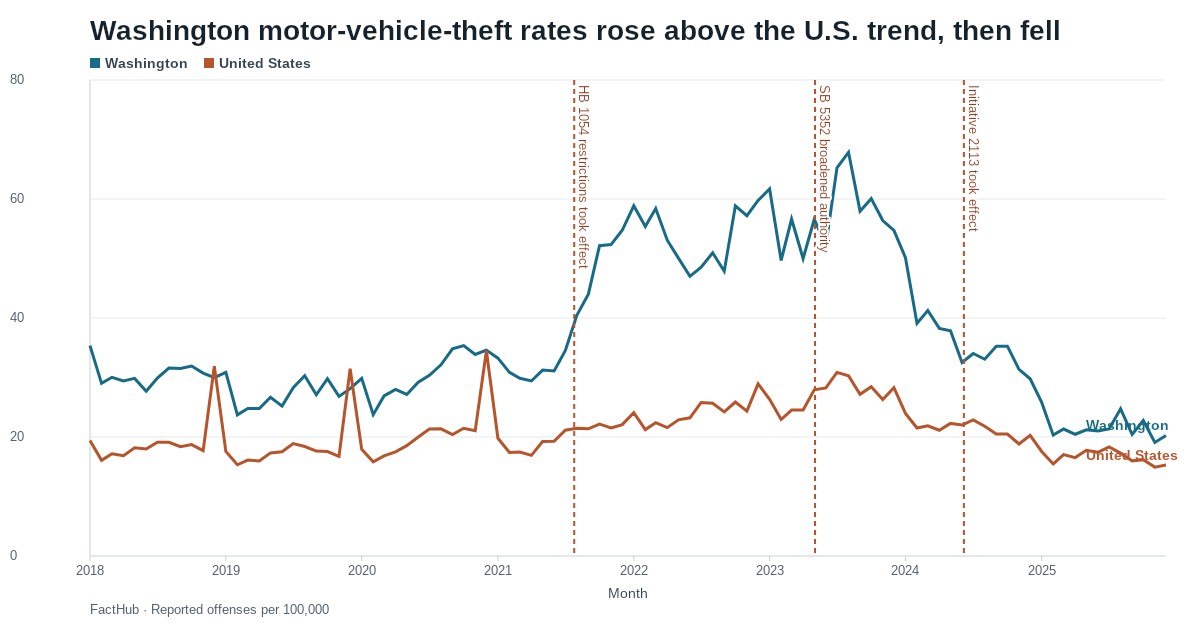
- Washington's pursuit limits likely added to the car-theft surge; how much is unknown. Version 6 · 3 of 6 checks passed · by auditor version 1
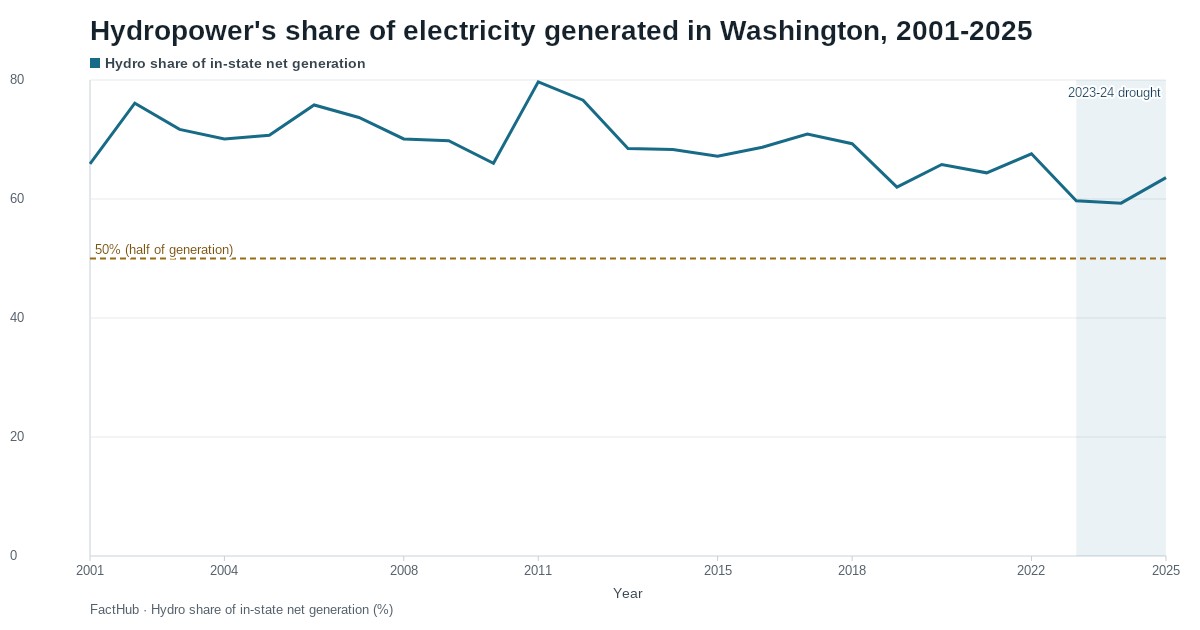
- Hydropower generates most of Washington's electricity; Grand Coulee leads U.S. plants by capacity. Version 2 · 4 of 6 checks passed · by auditor version 1
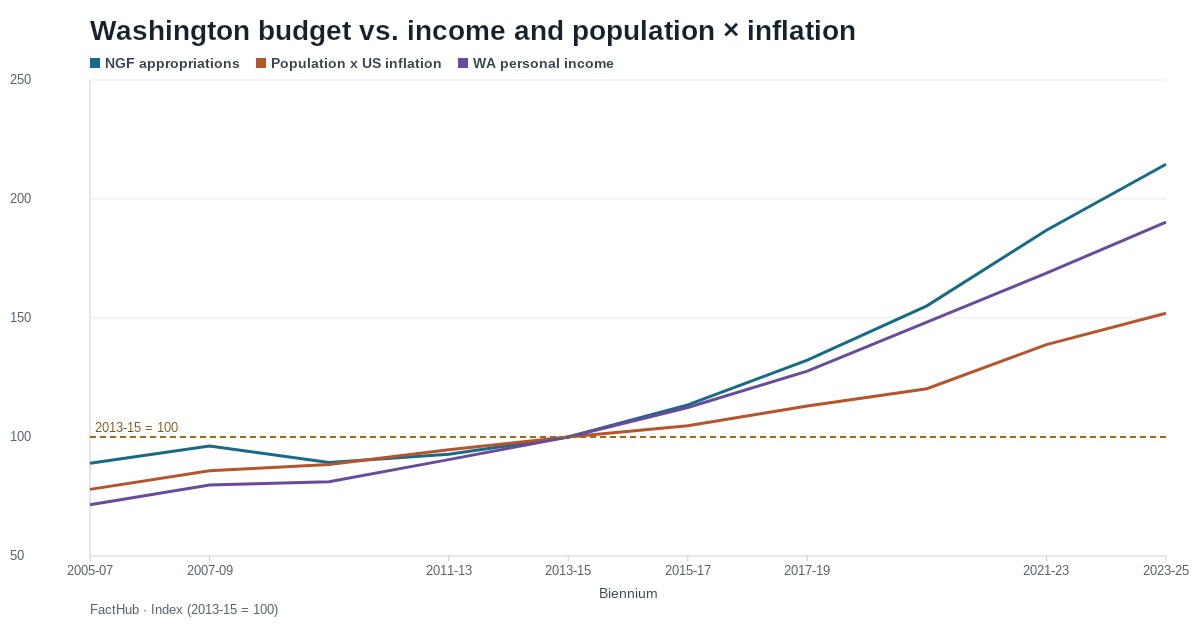
- Washington's budget more than doubled in a decade, outpacing population and inflation Version 3 · 4 of 6 checks passed · by auditor version 1